Veneer, laminate or lacquer: choosing finishes for wall cladding
Veneer, high-pressure laminate and lacquer each suit different walls. How they compare on look, durability and maintenance, and what to specify for each.
- Category
- Materials and finishes
- Published
- 8 September 2026
- Reading time
- 2 min read
- Written by
- Saudi Furnish engineering team
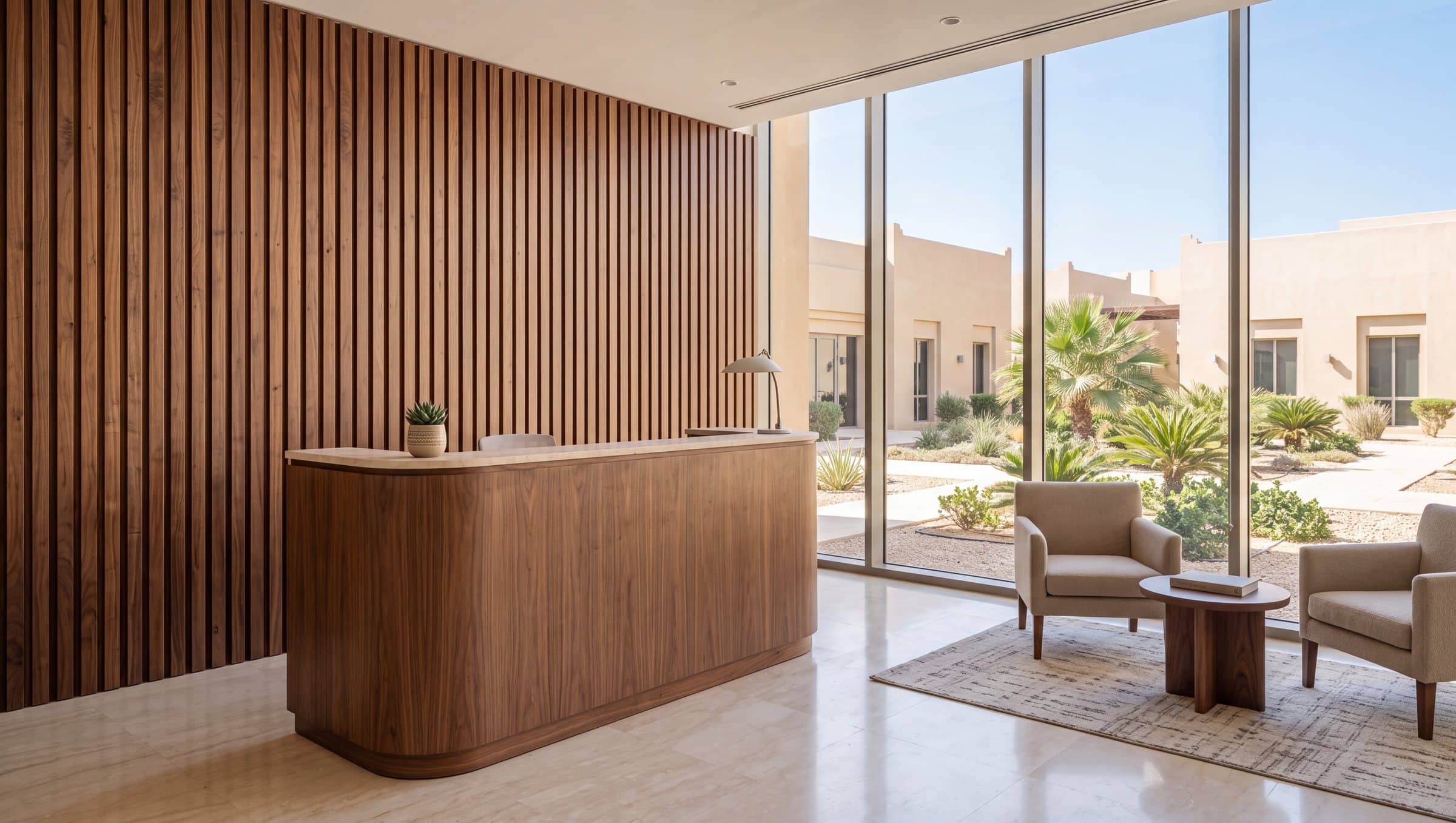
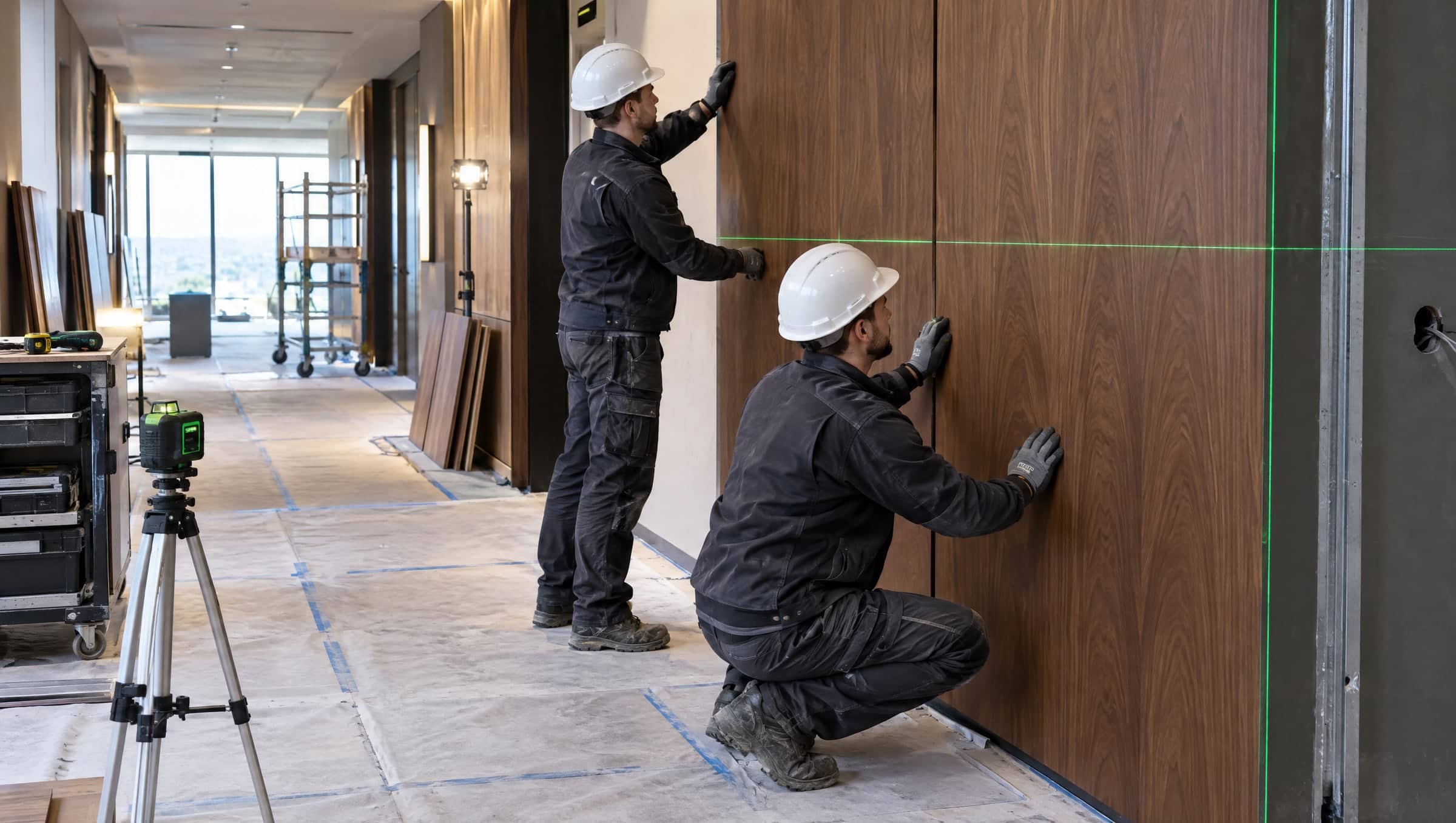
Wall cladding sets the character of a lobby, a boardroom or a hotel corridor, and it is one of the largest joinery items on most commercial fit-outs. The finish decides how it looks on day one, and how it looks after five years of trolleys, cleaning and air conditioning. These are the three finishes we are asked about most.
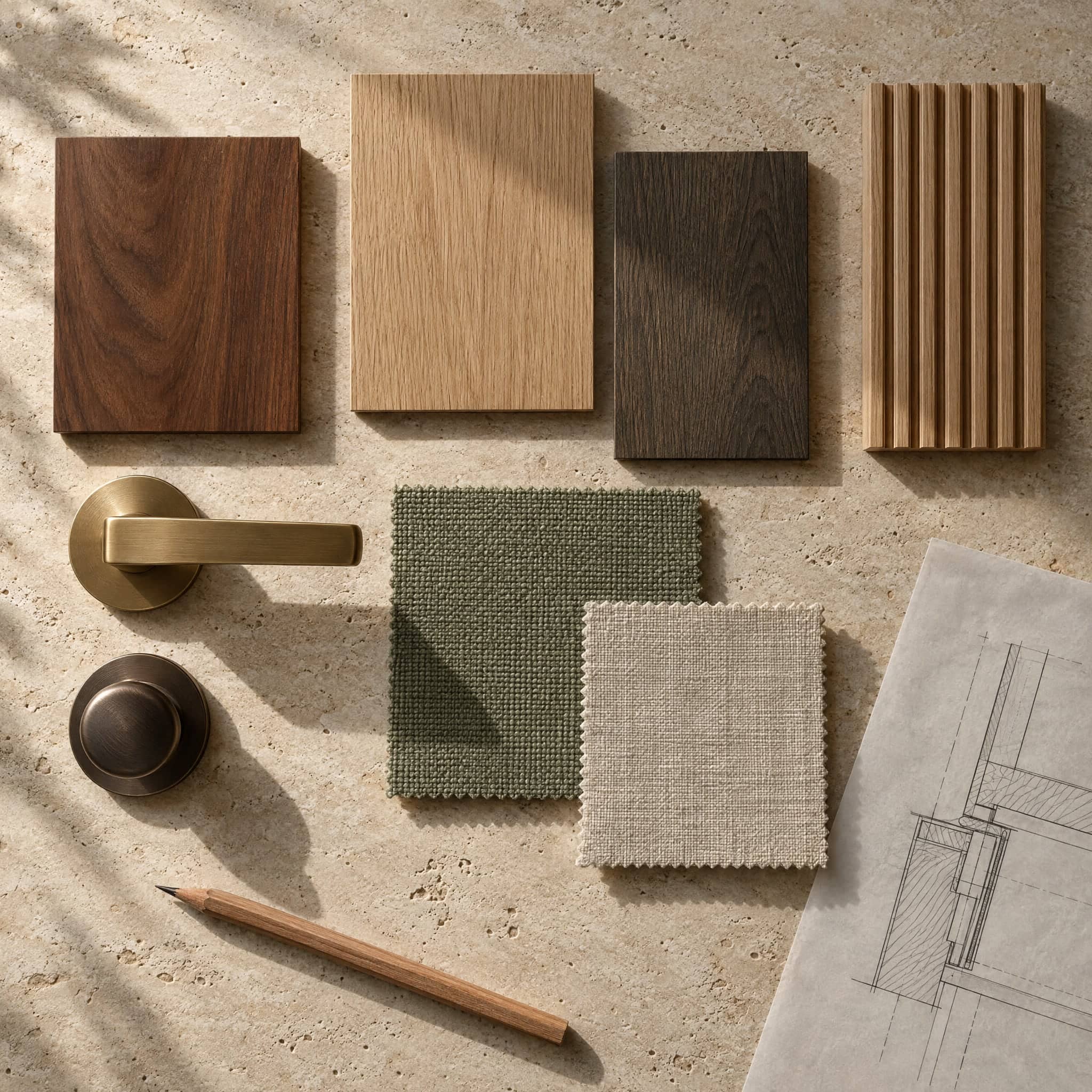
Natural wood veneer
Veneer is a thin slice of real timber pressed onto a stable core, usually MDF or, where a fire rating is required, fire-retardant MDF. It gives a depth and warmth that printed surfaces can't match, and every leaf is unique.
- Best for: lobbies, boardrooms, executive floors and hotel public areas
- Watch for: colour variation between logs, and colour change under strong daylight
- Specify: species, cut, matching method, and whether panels are sequence-matched across the wall
Sequence matching, where consecutive leaves from the same log run across neighbouring panels, is what makes a veneered wall read as one surface. It has to be planned at the shop drawing stage, before the veneer is cut.
High-pressure laminate
HPL is a printed decorative paper fused with resin under heat and pressure. Modern woodgrains are convincing at a distance, and the surface resists scratches, knocks and cleaning chemicals far better than veneer or lacquer.
- Best for: corridors, back-of-house, healthcare and education, and any wall that will be knocked
- Watch for: repeating patterns across large walls, and dark edges on cheaper boards
- Specify: product code, surface texture, edge detail and fire classification
Lacquer
Lacquered panels are sprayed and polished in the factory to a matt, satin or high-gloss finish in almost any colour. They suit contemporary interiors and feature walls.
- Best for: feature walls, reception desks, residences and boutique hospitality
- Watch for: chipped external corners and site damage, which are harder to repair invisibly than on veneer
- Specify: colour reference, sheen level and edge profile
Two things that apply to all three
Climate. Riyadh is dry, and air-conditioned interiors are drier still. Panels should be made from boards conditioned for that environment and delivered after the wet trades have finished, so they don't take on moisture and then shrink.
Fire. Cladding on escape routes and in public areas usually needs a fire classification. The core board and the finish together decide the result, so confirm the requirement before choosing the finish, not after.
Approve a mock-up, not just a sample. A 300 mm sample never shows what a four-metre wall will look like.
We make veneer, laminate and lacquer cladding in our Riyadh factory and install it with our own teams. See our joinery and cladding work, or send us your finishes schedule.
Planning a package like this?
Send the drawings or BOQ and our estimators will come back with scope, programme and a price.
Request a quoteShare