Specifying fire-rated timber doors: what to check before production
A fire-rated door is a tested assembly, not a leaf. What to confirm on the door schedule, in the certificates and on site before a package goes to production.
- Category
- Doors
- Published
- 22 September 2026
- Reading time
- 3 min read
- Written by
- Saudi Furnish engineering team
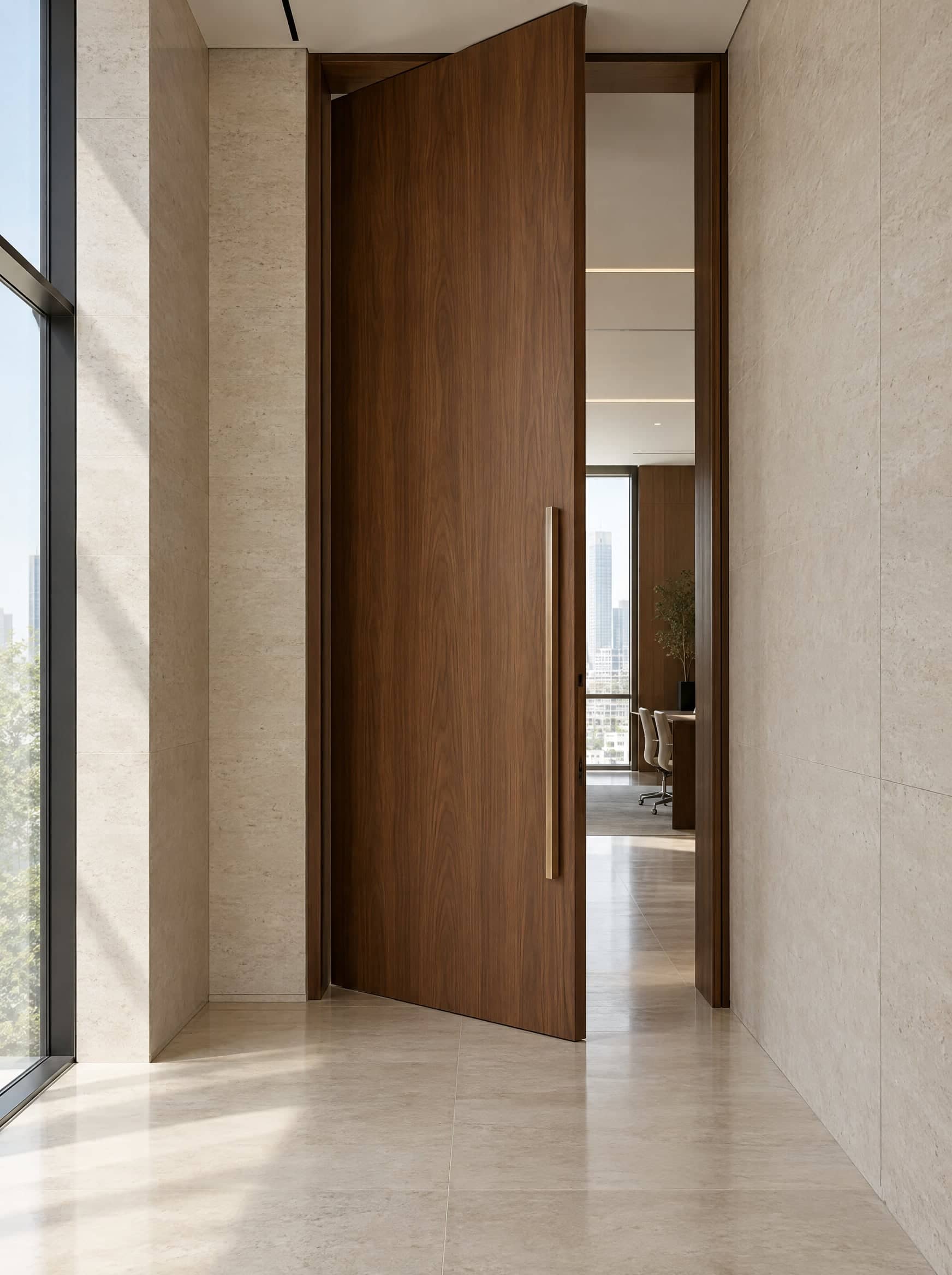
A fire-rated door only performs as it was tested: the leaf, the frame, the glazing, the seals and the ironmongery together. Swap one component on site and the rating on the label no longer describes the door in the opening. Most of the problems we are asked to fix on door packages come from treating the leaf as the product rather than the assembly.
Start from the door schedule
Every opening should carry its fire rating on the schedule before shop drawings start: 30, 60 or 90 minutes, and whether smoke control is required. The rating comes from the fire strategy for the building, which in the Kingdom is reviewed against the Saudi Fire Code (SBC 801) and approved by Civil Defense. If the schedule is silent, ask. Guessing leads to either an unsafe opening or an expensive over-specification.
The schedule should also record:
- the structural opening size and wall type, because the frame and its fixings are part of the tested assembly
- whether the door needs a vision panel, and its size
- acoustic requirements, which change the leaf core and the seals
- the ironmongery set for the opening, including closers and hold-open devices
Ask for evidence that covers the whole assembly
A test certificate for a door leaf alone is not enough. Ask for the test report or listing that covers the complete configuration you are buying: leaf construction, frame profile, glazing, intumescent and smoke seals, and the hinges, locks and closers. Doors tested to recognised standards such as UL 10C or EN 1634-1 carry a label on the leaf and the frame, and those labels are what inspectors look for at handover.
If a component isn't in the test evidence, it isn't part of the rating.
Ironmongery is part of the rating
Hinges, locks, closers and flush bolts must be approved for fire doors and compatible with the tested leaf. Fixing a standard lever handle with through-bolts, or routing for a lock that wasn't tested, can void the certification. We schedule ironmongery alongside the leaf and frame from the first shop drawing, so hardware preparation is machined in the factory rather than cut on site.
Installation decides the result
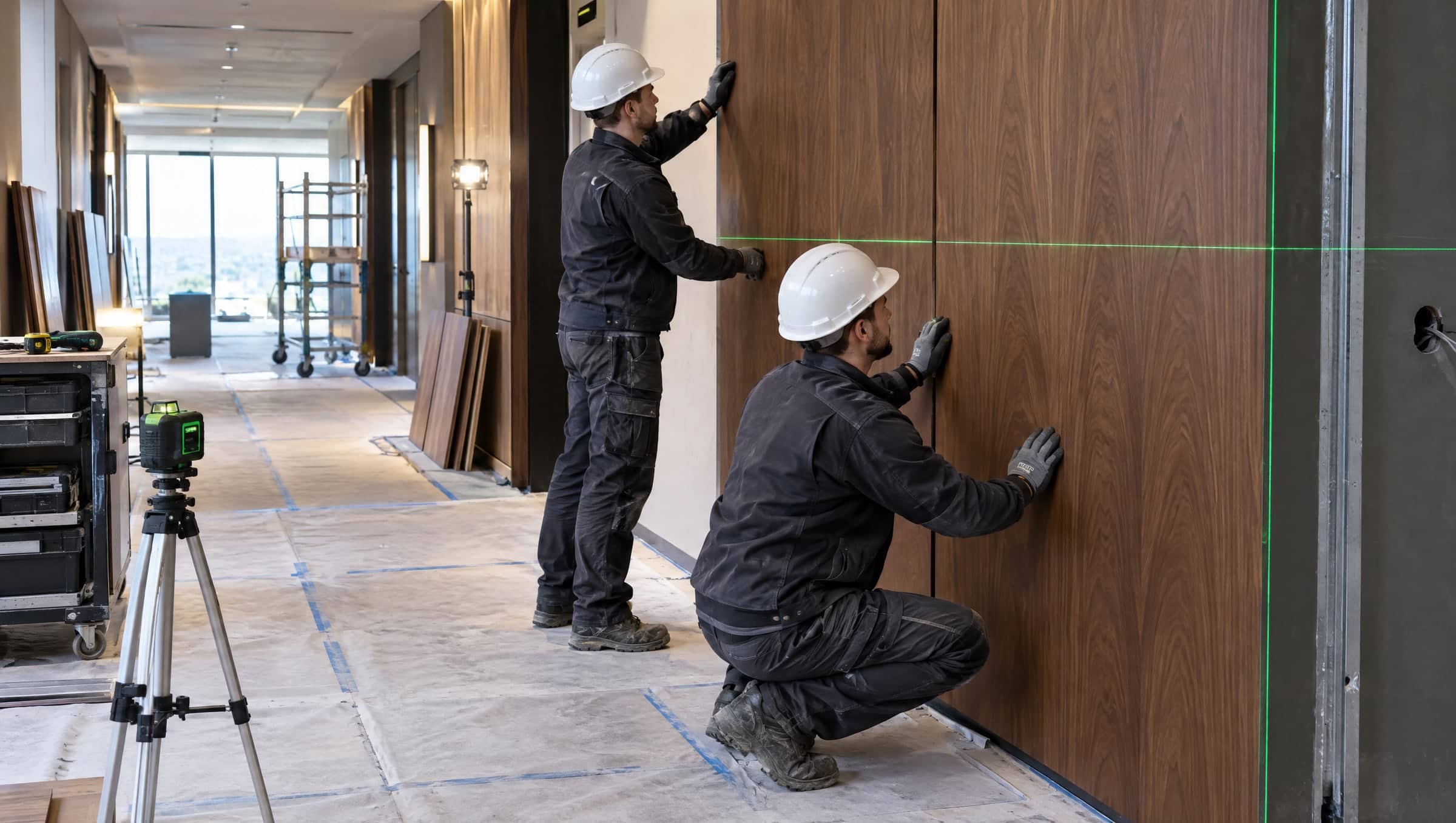
The gaps between leaf and frame, the packing and fixing of the frame, and how the gap between frame and wall is sealed are all set by the test. A good door installed with a 10 mm gap at the head is no longer a fire door. Our installers work from the approved shop drawings and record each opening before it is signed off.
What we deliver
Saudi Furnish supplies and installs fire-rated timber doors alongside non-rated packages for offices, hotels, institutions and residences. For each package we prepare the door schedule and shop drawings, coordinate the ironmongery, hand over the certificates of the product supplied for each configuration and install with our own teams.
If you are tendering a door package, send us the door schedule and we will review it with you before pricing.
Planning a package like this?
Send the drawings or BOQ and our estimators will come back with scope, programme and a price.
Request a quoteShare